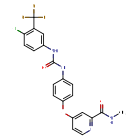
Sorafenib is a kinase inhibitor used to treat unresectable liver carcinoma, advanced renal carcinoma, and differentiated thyroid carcinoma. Sorafenib is a bi-aryl urea and an oral multikinase inhibitor.
- Mechanism
- Curator reviewed · 8 references
Kinases are involved in tumour cell signalling, proliferation, angiogenesis, and apoptosis. Sorafenib inhibits multiple intracellular serine/threonine kinases in the Ras/mitogen-activated protein kinase (MAPK) signal transduction pathway. Intracellular Raf serine/threonine kinase isoforms inhibited by sorafenib include Raf-1 (or C-Raf), wild-type B-Raf, and mutant B-Raf. Sorafenib inhibits cell surface tyrosine kinase receptors such as KIT, FMS-like tyrosine kinase 3 (FLT-3), RET, RET/PTC, vascular endothelial growth factor receptor-1 (VEGFR-1), VEGFR-2, VEGFR-3, and platelet-derived growth factor receptor-β (PDGFR-β).
Sorafenib is thought to exhibit a dual mechanism of action: it blocks tumour proliferation and growth by inhibiting the RAF/MEK/extracellular signal-regulated kinase (ERK) pathway on tumour cells, and reduces tumour angiogenesis by inhibiting VEGFR and PDGFR signalling in tumour vasculature.
- Primary indication
- Sorafenib is indicated for the treatment of unresectable hepatocellular carcinoma and advanced renal cell carcinoma.Curator reviewed · 8 structured indications
- Formula / weight
- C21H16ClF3N4O3 · 464.825 g/mol (avg)
- First approval
- Canada, 2006 · United States, 2005 · European Union, 2016
- Code names
- BAY 43-9006
- Brand names
Resolves to
MLDQJTXFUGDVEO-UHFFFAOYSA-NSMILESCNC(=O)C1=NC=CC(OC2=CC=C(NC(=O)NC3=CC(=C(Cl)C=C3)C(F)(F)F)C=C2)=C1What you can answer from here — as of September 23, 2026
Which drugs share a target with Sorafenib, and which of those have an active Phase 3 trial?
Create a free account or log in to explore the full data card.
Create Account