Tucatinib is a HER2-directed tyrosine kinase inhibitor indicated in combination with other agents for HER2-positive unresectable or metastatic breast cancer, including maintenance treatment, and for RAS wild-type HER2-positive colorectal cancer. FDA approval since 2020.
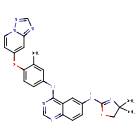
- Mechanism
- Curator reviewed · 4 references
Mutations in the HER-2 gene are observed in some types of breast carcinoma. Tucatinib inhibits the tyrosine kinase enzyme of the HER-2 gene. Mutations of tyrosine kinase in the HER-2 gene lead to cascade effects of increased cell signaling and proliferation, resulting in malignancy. Results of in vitro studies show that tucatinib inhibits the phosphorylation of both HER-2 and HER-3, leading to downstream changes in MAPK and AKT signaling and cell proliferation. Anti-tumor activity occured in the cells that expressed HER-2. In vivo, tucatinib has been shown to inhibit HER-2 expressing tumors, likely by the same mechanism.
- Primary indication
- Tucatinib is indicated for the treatment of adult patients with: - unresectable locally advanced or metastatic HER2-positive breast cancer following induction treatment, as maintenance treatment in combination with trastuzumab and pertuzumab - advanced unresectable or...Curator reviewed · 5 structured indications
- Formula / weight
- C26H24N8O2 · 480.532 g/mol (avg)
- First approval
- Canada, 2025 · United States, 2020 · European Union, 2021
- Code names
- ARRY-380 · MK-7119 · ONT-380 · PF-07265792
- Brand names
Resolves to
SDEAXTCZPQIFQM-UHFFFAOYSA-NSMILESCC1=CC(NC2=NC=NC3=CC=C(NC4=NC(C)(C)CO4)C=C23)=CC=C1OC1=CC2=NC=NN2C=C1What you can answer from here — as of October 09, 2026
Which drugs share a target with Tucatinib, and which of those have an active Phase 3 trial?
Create a free account or log in to explore the full data card.
Create Account