Investigated for use/treatment in solid tumors, cutaneous t-cell lymphoma, myelodysplastic syndrome, and leukemia (lymphoid).
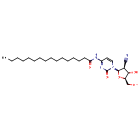
- Mechanism
- Curator reviewed
Sapacitabine appears to act through a dual mechanism. It interferes with DNA synthesis by causing single-strand DNA breaks and also induces arrest of cell cycle progression mainly at G2/M-Phase. Both sapacitabine and CNDAC, its major metabolite or a substance into which the drugs converts after ingestion by patients, have demonstrated potent anti-tumor activity in preclinical studies.
- Primary indication
- Investigated for use/treatment in solid tumors, cutaneous t-cell lymphoma, myelodysplastic syndrome, and leukemia (lymphoid).Curator reviewed
- Formula / weight
- C26H42N4O5 · 490.645 g/mol (avg)
- Also known as
- 1-(2-C-cyano-2-deoxy- ß-D-arabino-pentafuranosyl)-N4-palmitoylcytosine
- Code names
- CS-682 · CYC-682
Resolves to
LBGFKUUHOPIEMA-PEARBKPGSA-NSMILESCCCCCCCCCCCCCCCC(=O)NC1=NC(=O)N(C=C1)[C@@H]1O[C@H](CO)[C@@H](O)[C@@H]1C#NWhat you can answer from here — as of November 16, 2022
Which companies are running trials of Sapacitabine, in which indications and phases, and which of those programs are still active?
Create a free account or log in to explore the full data card.
Create Account