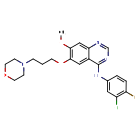
Gefitinib is a tyrosine kinase inhibitor used as first-line therapy to treat non-small cell lung carcinoma (NSCLC) that meets certain genetic mutation criteria. Gefitinib (originally coded ZD1839) is a drug used in the treatment of certain types of cancer.
- Mechanism
- Curator reviewed
Gefitinib is an inhibitor of the epidermal growth factor receptor (EGFR) tyrosine kinase that binds to the adenosine triphosphate (ATP)-binding site of the enzyme. EGFR is often shown to be overexpressed in certain human carcinoma cells, such as lung and breast cancer cells. Overexpression leads to enhanced activation of the anti-apoptotic Ras signal transduction cascades, subsequently resulting in increased survival of cancer cells and uncontrolled cell proliferation. Gefitinib is the first selective inhibitor of the EGFR tyrosine kinase which is also referred to as Her1 or ErbB-1. By inhibiting EGFR tyrosine kinase, the downstream signaling cascades are also inhibited, resulting in inhibited malignant cell proliferation.
- Primary indication
- For the continued treatment of patients with locally advanced or metastatic non-small cell lung cancer after failure of either platinum-based or docetaxel chemotherapies.Curator reviewed · 2 structured indications
- Formula / weight
- C22H24ClFN4O3 · 446.902 g/mol (avg)
- First approval
- Canada, 2003 · United States, 2015 · European Union, 2016
- Code names
- ZD-1839
- Brand names
Resolves to
XGALLCVXEZPNRQ-UHFFFAOYSA-NSMILESCOC1=C(OCCCN2CCOCC2)C=C2C(NC3=CC(Cl)=C(F)C=C3)=NC=NC2=C1What you can answer from here — as of September 20, 2026
Which drugs share a target with Gefitinib, and which of those have an active Phase 3 trial?
Create a free account or log in to explore the full data card.
Create Account