Bicisate is a compound complexed with technetium 99 used in single photon emission computerized tomography to localize a stroke. Bicisate, also known as ethyl cysteinate dimer (ECD), is a N,N'-1,2-ethylene-di-yl-bis-L-cysteinate diethyl ester.
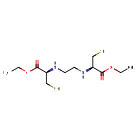
- Mechanism
- Curator reviewed · 4 references
Bicisate is rapidly uptaken by the brain. The retention of bicisate in the brain is associated with stereospecific de-esterification to hydrophilic acid derivatives. Even though both DD and LL isomers demonstrate brain uptake, only the LL presents brain retention. Bicisate brain localization is performed by passive diffusion and the presence of slow hydrolysis in the blood and rapid hydrolysis in the brain. The hydrolysis of bicisate forms the monoacid and diacid bicisate derivatives. The formation of these derivatives results in high brain uptake and retention. The uptake of bicisate depends on the blood flow directed to the brain and thus the presence of a stroke will be translated into specific zones in the brain that would not include the complex of bicisate and technetium Tc-99m.
- Primary indication
- Bicisate as a complex with technetium Tc-99m is used in single photon emission computerized tomography (SPECT) as an adjunct to conventional CT or MRI in the localization of stroke in patients whom the presence of...Curator reviewed · 2 structured indications
- Formula / weight
- C12H24N2O4S2 · 324.45 g/mol (avg)
- First approval
- United States, 1994
Resolves to
RZQNBTMGBODDSK-UWVGGRQHSA-NSMILESCCOC(=O)[C@H](CS)NCCN[C@@H](CS)C(=O)OCCWhat you can answer from here — as of August 30, 2026
Which other approved drugs treat the same conditions as Bicisate, and which companies have late-stage candidates in those indications?
Create a free account or log in to explore the full data card.
Create Account