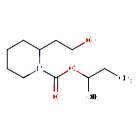
Icaridin, also known as Picaridin or hydroxy-ethyl isobutyl piperidine carboxylate, is a cyclic amine and a member of the piperidine chemical family. Piperidines are structural components of piperine, which is... Piperidines are structural components of piperine, which is a plant extract from the genus _Piper _, or pepper.
- Mechanism
- Curator reviewed · 4 references
The exact mechanism and target molecules of icaridin repelling insects are not fully understood; it is presumed that piperine interacts with the olfactory system consisting of odorant receptors (ORs) that need a common co-receptor (ORCO), and of ionotropic receptors (IR), leading to the insect's inability to recognize its host's cues. It is also suggested that icaridin may bind to odorant binding protein 1 (AgamOBP1) at different binding sites. A study demonstrated that icaridin inhibited the odorant-induced responses of AaOR2 and AaOR8 expressed in Xenopus oocytes, leading to altered olfactory inputs by olfactory sensory neurons (OSN).
- Primary indication
- Icaridin is indicated for use to repel insects, such as mosquitoes, biting flies, ticks, chiggers, and fleas, via topical use or over clothing.Curator reviewed · 1 structured indication
- Formula / weight
- C12H23NO3 · 229.3159 g/mol (avg)
- Also known as
- Picaridin · Pikaridin · Propidine
- Code names
- EC 423-210-8 · KBR 3023
Resolves to
QLHULAHOXSSASE-UHFFFAOYSA-NSMILESCCC(C)OC(=O)N1CCCCC1CCOWhat you can answer from here — as of March 06, 2025
Which drugs share a target with Icaridin, and which of those have an active Phase 3 trial?
Create a free account or log in to explore the full data card.
Create Account