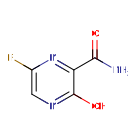
Favipiravir is an antiviral used to manage influenza, and that has the potential to target other viral infections. Discovered by Toyama Chemical Co., Ltd. in Japan, favipiravir is a modified pyrazine analog that was initially approved for therapeutic use in resistant cases of influenza.
- Mechanism
- Curator reviewed · 7 references
The mechanism of action of favipiravir is novel compared to existing influenza antivirals that primarily prevent entry and exit of the virus from cells. The active favipiravir-RTP selectively inhibits RNA polymerase and prevents replication of the viral genome. There are several hypotheses as to how favipiravir-RTP interacts with RNA dependent RNA polymerase (RdRp). Some studies have shown that when favipiravir-RTP is incorporated into a nascent RNA strand, it prevents RNA strand elongation and viral proliferation. Studies have also found that the presence of purine analogs can reduce favipiravir’s antiviral activity, suggesting competition between favipiravir-RTP and purine nucleosides for RdRp binding.
Although favipiravir was originally developed to treat influenza, the RdRp catalytic domain (favipiravir's primary target), is expected to be similar for other RNA viruses. This conserved RdRp catalytic domain contributes to favipiravir's broad-spectrum coverage.
- Primary indication
- In 2014, favipiravir was approved in Japan to treat cases of influenza that were unresponsive to conventional treatment.Curator reviewed · 2 structured indications
- Formula / weight
- C5H4FN3O2 · 157.104 g/mol (avg)
- Also known as
- Fapilavir · Favilavir
- Code names
- T-705
Resolves to
ZCGNOVWYSGBHAU-UHFFFAOYSA-NSMILESNC(=O)C1=NC(F)=CN=C1OWhat you can answer from here — as of January 29, 2025
Which drugs share a target with Favipiravir, and which of those have an active Phase 3 trial?
Create a free account or log in to explore the full data card.
Create Account