Benserazide hydrochlorideProduct ingredient for Benserazide
- Name
- Benserazide hydrochloride
- Drug Entry
- Benserazide
When levodopa is used by itself as a therapy for treating Parkinson's disease, its ubiquitous metabolism into dopamine is responsible for a resultant increase in the levels of circulating dopamine in the blood and to various extracerebral tissues. This can result in a number of side effects like nausea, vomiting, or even cardiac arrhythmias that may diminish patient adherence 3,2. A decarboxylase inhibitor like benserazide is consequently an effective compound to combine with levadopa as it is incapable of crossing the blood-brain barrier itself but acts to prevent the formation of dopamine from levadopa in extracerebral tissues - thereby acting to minimize the occurrence of extracerebral side effects 3,2.
Levodopa/benserazide combination products are used commonly worldwide for the management of Parkinson's disease. In particular, although the specific levodopa/benserazide combination is formally approved for use in Canada and much of Europe, the FDA has approved another similar levodopa/dopa decarboxylase inhibitor combination in the form of levodopa and carbidopa.
Moreover, the European Medcines Agency has conferred an orphan designation upon benseraside since 2015 for its potential to be used as a therapy for beta thalassaemia as well 4.
- Accession Number
- DBSALT002687
- Structure
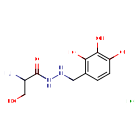
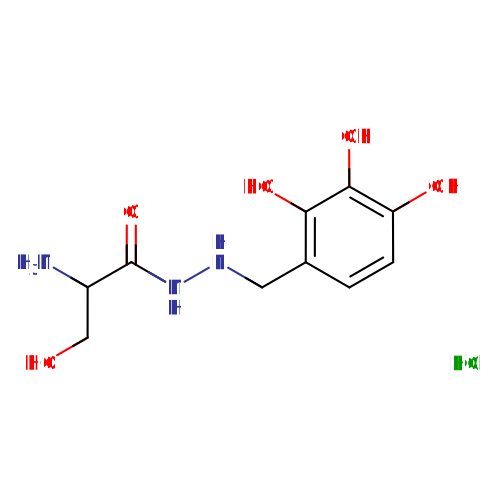
Structure for Benserazide hydrochloride (DBSALT002687)
- Synonyms
- Benserazide HCl