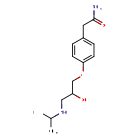
Atenolol is a synthetic beta-1 selective blocker used in the management of hypertension and chronic angina, and to reduce mortality in known or suspected myocardial infarction in hemodynamically stable patients. Atenolol is a cardioselective beta-blocker used in a variety of cardiovascular conditions.
- Mechanism
- Curator reviewed · 4 references
Atenolol is a cardioselective beta-blocker, called such because it selectively binds to the β1-adrenergic receptor as an antagonist up to a reported 26 fold more than β2 receptors. Selective activity at the β1 receptor produces cardioselectivity due to the higher population of this receptor in cardiac tissue. Some binding to β2 and possibly β3 receptors can still occur at therapeutic dosages but the effects mediated by antagonizing these are significantly reduced from those of non-selective agents. β1 and β2 receptors are Gs coupled therefore antagonism of their activation reduces activity of adenylyl cyclase and its downstream signalling via cyclic adenosime monophosphate and protein kinase A (PKA).
In cardiomyocytes PKA is thought to mediate activation of L-type calcium channels and ryanodine receptors through their phosphorylation. L-type calcium channels can then provide an initial rise in intracellular calcium and trigger the ryanodine receptors to release calcium stored in the sarcoplasmic reticulum (SR) and increased contractility. PKA also plays a role in the cessation of contraction by phosphorylating phospholamban which in turn increases the affinity of SR Ca2+ ATPase to increase reuptake of calcium into the SR. It also phophorylates troponin I to reduce affinity of the protein for calcium. Both of these events lead to a reduction in contraction which, when coupled with the initial increase in contraction, allows for faster cycling and consequently higher heart rate with increased contractility. L-type calcium channels are also a major contributor to cardiac depolarization and their activation can increase frequency of action potentials and possibly the incidence of ectopic potentials.
Similar inihibitory events occur in the bronchial smooth muscle to mediate relaxation including phosphorylation of myosin light-chain kinase, reducing its affinity for calcium. PKA also inhibits the excitatory Gq coupled pathway by phosphorylating the inositol trisphosphate receptor and phospholipase C resulting in inhibition of intracellular calcium release. Antagonism of this activity by beta-blocker agents like atenolol can thus cause increased bronchoconstriction.
- Primary indication
- Indicated for: 1) Management of hypertension alone and in combination with other antihypertensives.Curator reviewed · 12 structured indications
- Formula / weight
- C14H22N2O3 · 266.3361 g/mol (avg)
- First approval
- Canada, 1996 · United States, 1990
- Brand names
Resolves to
METKIMKYRPQLGS-UHFFFAOYSA-NSMILESCC(C)NCC(O)COC1=CC=C(CC(N)=O)C=C1What you can answer from here — as of September 23, 2026
Which drugs share a target with Atenolol, and which of those have an active Phase 3 trial?
Create a free account or log in to explore the full data card.
Create Account