Tretinoin is a vitamin A derivative used to treat acne vulgaris and certain types of promyelocytic leukemia, as well as various skin conditions in over-the-counter medications. Tretinoin, also known as all-trans-retinoic acid (ATRA), is a naturally occurring derivative of vitamin A (retinol).
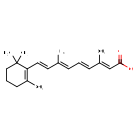
- Mechanism
- Curator reviewed · 18 references
The exact mechanism of action of tretinoin in skin conditions and acute promyelocytic leukemia (APL) has not been fully elucidated; however, several proposed mechanisms exist. Tretinoin is believed to exert its pharmacological actions by binding to and activating two types of nuclear receptors - retinoic acid receptors (RARs) alpha, beta, and gamma and retinoid X receptors (RXRs). In the human skin, RARs (especially RAR-alpha) form heterodimers with RXR to act as inducible transcription regulators of genes involved in cell differentiation by binding to retinoic acid response elements. Tretinoin binds to RXRs to promote epidermal proliferation. It also blocks the actions of inflammatory mediators, enhancing procollagen production and collagen type I and III formations. Some animal and human studies suggest that tretinoin induces the expression of transforming growth factor beta (TGF-β), which stimulates the transcription of several types of collagen messenger RNA. Collagen formation curtails further solar UV-induced skin damage and aging processes.
Acne is associated with abnormal follicular formation from excessive keratinization of epithelial cells. Tretinoin promotes cornified cell detachment and enhances keratinocyte shedding. It also stimulates mitotic activity and loosely-adherent corneocyte turnover to expel comedo contents, reducing microcomedo precursor lesions of acne vulgaris. Tretinoin may reduce epidermal melanin and pigmentation by increasing keratinocyte turnover and reducing tyrosinase activity.
RAR-alpha and -beta have also been implicated in APL. APL is characterized by a t(15;17) chromosomal translocation, which fuses the promyelocytic myeloid leukemia (PML) gene with the RAR-alpha gene. The resulting PML-RAR-alpha fusion protein plays a role in the pathogenesis of APL by aberrating promyelocyte differentiation. The PML-RAR-alpha fusion protein is found to be predominant in leukemic cells, exerting a dominant negative effect on RAR, RXR and PML function. Tretinoin induces terminal differentiation in hemopoietic precursor cell lines and APL cells. Tretinoin is believed to promote caspase-mediated cleavage and proteasome-dependent degradation to cause apoptosis and degradation of the PML-RAR-alpha fusion protein. It may also convert the fusion protein from a transcription repressor to an activator.
- Primary indication
- Oral tretinoin is indicated for induction of remission in adults and pediatric patients one year of age and older with acute promyelocytic leukemia (APL), characterized by the presence of t(15;17) translocation or presence of PML/RARα...Curator reviewed · 17 structured indications
- Formula / weight
- C20H28O2 · 300.442 g/mol (avg)
- First approval
- Canada, 2006 · United States, 1973
- Also known as
- all trans Retinoic acid · all trans-Retinoic acid · all-(E)-Retinoic acid · all-trans-Retinoic acid · all-trans-Tretinoin
- Code names
- AGN 100335 · NSC-122758 · Ro 1-5488 · Ro 5488
- Brand names
Resolves to
SHGAZHPCJJPHSC-YCNIQYBTSA-NSMILESC\C(\C=C\C1=C(C)CCCC1(C)C)=C/C=C/C(/C)=C/C(O)=OWhat you can answer from here — as of September 23, 2026
Which drugs share a target with Tretinoin, and which of those have an active Phase 3 trial?
Create a free account or log in to explore the full data card.
Create Account