Clorazepic acid is a benzodiazepine used to treat anxiety, partial seizures, and alcohol withdrawal. Clorazepic acid (clorazepate) is a water-soluble benzodiazepine with muscle-relaxant and anticonvulsant actions effective in the treatment of anxiety.
- Mechanism
- Curator reviewed · 3 references
Clorazepate is a benzodiazepine with depressant effects on the central nervous system. Benzodiazepines are able to enhance the binding of gamma-aminobutyric acid (GABA) to the GABA type A (GABA-A) receptor by binding to a region in the extracellular domain found at the interface between the alpha (α) and gamma (γ) subunits of the GABA-A receptor. The interaction of GABA and the GABA-A receptor promotes channel opening, leading to an increased chloride influx. Consequently, the use of benzodiazepines, such as clorazepate, leads to neuronal hyperpolarization.
- Primary indication
- Clorazepate is indicated for the management of anxiety disorders or the short-term relief of the symptoms of anxiety.Curator reviewed · 4 structured indications
- Formula / weight
- C16H11ClN2O3 · 314.723 g/mol (avg)
- First approval
- Canada, 2012 · United States, 1972
- Also known as
- Chlorazepate · Clorazepate
- Code names
- 4306-CB FREE ACID · 4311 CB · Abbott 35616 · AH 3232 · CB 4306 · Ro 6-6616 · TR 19119
Resolves to
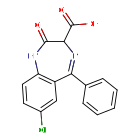
XDDJGVMJFWAHJX-UHFFFAOYSA-NSMILESOC(=O)C1N=C(C2=CC=CC=C2)C2=C(NC1=O)C=CC(Cl)=C2What you can answer from here — as of September 23, 2026
Which drugs share a target with Clorazepic acid, and which of those have an active Phase 3 trial?
Create a free account or log in to explore the full data card.
Create Account