Sulfadiazine is a sulfonamide antibiotic used in a variety of infections, such as urinary tract infections, trachoma, and chancroid. One of the short-acting sulfonamides used in combination with pyrimethamine to treat toxoplasmosis in patients with acquired immunodeficiency syndrome and in newborns with congenital infections.
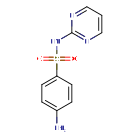
- Mechanism
- Curator reviewed
Sulfadiazine is a competitive inhibitor of the bacterial enzyme dihydropteroate synthetase. This enzyme is needed for the proper processing of para-aminobenzoic acid (PABA) which is essential for folic acid synthesis. The inhibited reaction is necessary in these organisms for the synthesis of folic acid.
- Primary indication
- For the treatment of rheumatic fever and meningococcal meningitisCurator reviewed · 16 structured indications
- Formula / weight
- C10H10N4O2S · 250.277 g/mol (avg)
- First approval
- Canada, 1997 · United States, 1994
- Also known as
- 2-sulfanilamidopyrimidine · Sulfadiazin · Sulfapyrimidine · Sulphadiazine
Resolves to
SEEPANYCNGTZFQ-UHFFFAOYSA-NSMILESNC1=CC=C(C=C1)S(=O)(=O)NC1=NC=CC=N1What you can answer from here — as of September 23, 2026
Which drugs share a target with Sulfadiazine, and which of those have an active Phase 3 trial?
Create a free account or log in to explore the full data card.
Create Account