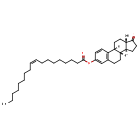
Oleoyl-estrone (OE) is a fatty acid ester of estrone. This hormone occurs naturally and is found circulating in various animal species and humans. It has been shown in animal studies... It has been shown in animal studies to promote the loss of body fat while maintaining body protein storage, maintaining nitrogen balance.
- Mechanism
- Curator reviewed
Based on extensive preclinical studies, it is believed that oleoyl-estrone (OE) works by a dual mechanism of action. Centrally, OE appears to act at the brain's hypothalamus, resetting the body's ponderostat, the “food control center” in the brain that detects and integrates signals that control both appetite and metabolic behavior. Peripherally, OE also causes reduced storage of fat in “white fat” tissue and allows skeletal muscle to use fat as an alternate energy source.
- Primary indication
- For the treatment of obesity.Curator reviewed
- Formula / weight
- C36H54O3 · 534.8122 g/mol (avg)
- Also known as
- Estrone monooleate · Estrone oleic acid ester · Oleoyl estrone · Oleoylestrone
- Code names
- MP-101
Resolves to
IMIPDPVHGGHVNH-YWVHRCQQSA-NSMILES[H][C@@]12CCC(=O)[C@@]1(C)CC[C@]1([H])C3=C(CC[C@@]21[H])C=C(OC(=O)CCCCCCC\C=C/CCCCCCCC)C=C3What you can answer from here — as of October 01, 2026
Which drugs share a target with Oleoyl-estrone, and which of those have an active Phase 3 trial?
Create a free account or log in to explore the full data card.
Create Account