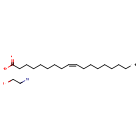
Ethanolamine oleate is a mild sclerosing agent used in the treatment of esophageal varices with recent bleeding episodes. It is composed of ethanolamine, a basic substance, which when combined with oleic acid forms a clear, straw to pale yellow colored, deliquescent oleate.
- Mechanism
- Curator reviewed
The oleic acid component of ethanolamine oleate is responsible for the inflammatory response, and may also activate coagulation in vivo by release of tissue factor and activation of Hageman factor. The ethanolamine component, however, may inhibit fibrin clot formation by chelating calcium, so that a procoagulant action of ethanolamine oleate has not been demonstrated.
- Primary indication
- For the treatment of patients with esophageal varices that have recently bled, to prevent rebleeding.Curator reviewed · 1 structured indication
- Formula / weight
- C20H41NO3 · 343.5444 g/mol (avg)
- First approval
- Canada, 1992 · United States, 1998
- Also known as
- Ethamolin · Monoethanolamine oleate · Oldamin
- Code names
- FO-611
- Brand names
Resolves to
KGWDUNBJIMUFAP-KVVVOXFISA-NSMILESNCCO.CCCCCCCC\C=C/CCCCCCCC(O)=OWhat you can answer from here — as of September 23, 2026
Which drugs share a target with Ethanolamine oleate, and which of those have an active Phase 3 trial?
Create a free account or log in to explore the full data card.
Create Account