Dimercaprol is a chelating agent used as an antidote to arsenic, gold, and mercury poisoning, as well as acute lead poisoning in combination with edetate calcium disodium. Dimercaprol is a traditional chelating agent developed by British biochemists at Oxford University during World War II.
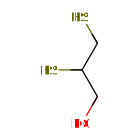
- Mechanism
- Curator reviewed
The sulfhydryl groups of dimercaprol form complexes with certain heavy metals thus preventing or reversing the metallic binding of sulfhydryl-containing enzymes. The complex is excreted in the urine.
- Primary indication
- For the treatment of arsenic, gold and mercury poisoning.Curator reviewed · 4 structured indications
- Formula / weight
- C3H8OS2 · 124.225 g/mol (avg)
- First approval
- Canada, 1997 · United States, 2007
- Also known as
- 1,2-dithioglycerol · 2,3-dimercaptopropanol · 2,3-dithiopropanol · 2,3-Mercaptopropanol · British anti-lewisite
- Brand names
Resolves to
WQABCVAJNWAXTE-UHFFFAOYSA-NSMILESOCC(S)CSWhat you can answer from here — as of October 21, 2026
Which other approved drugs treat the same conditions as Dimercaprol, and which companies have late-stage candidates in those indications?
Create a free account or log in to explore the full data card.
Create Account