Elamipretide is a mitochondrial cardiolipin binder used to improve muscle strength in patients with Barth syndrome. Elamipretide is a mitochondrial cardiolipin binder being investigated for diseases involving mitochondrial dysfunction.
- Mechanism
- Curator reviewed · 8 references
Barth syndrome is a rare X-linked genetic disorder characterized by mitochondrial dysfunction. Elamipretide is a mitochondrial cardiolipin binder that penetrates cells and accumulates in the mitochondria: It localizes to the inner mitochondrial membrane, improving mitochondrial morphology and function. Elamipretide's mechanism of action involves electrostatic interactions with cardiolipin, a phospholipid critical for mitochondrial structure and electron transport chain function. By binding to cardiolipin, elamipretide stabilizes the mitochondrial membrane, prevents oxidative damage, and maintains membrane potential. This interaction preserves cristae integrity, reduces reactive oxygen species (ROS) production, and maintains ATP production.
Elamipretide also enhances the activity of mitochondrial respiratory complexes, facilitating efficient electron transfer and ATP synthesis. Furthermore, elamipretide inhibits the opening of the mitochondrial permeability transition pore (mPTP), protecting against mitochondrial damage during reperfusion and reducing cell death in ischemic conditions.
- Primary indication
- Under accelerated approval in the US, elamipretide is indicated to improve muscle strength in adult and pediatric patients with Barth syndrome weighing at least 30 kg.Curator reviewed · 1 structured indication
- Formula / weight
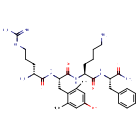
- C32H49N9O5 · 639.802 g/mol (avg)
- First approval
- United States, 2025
- Code names
- MTP-131 · RX-31 · SS-31
- Brand names
Resolves to
SFVLTCAESLKEHH-WKAQUBQDSA-NSMILESCC1=CC(O)=CC(C)=C1C[C@H](NC(=O)[C@H](N)CCCNC(N)=N)C(=O)N[C@@H](CCCCN)C(=O)N[C@@H](CC1=CC=CC=C1)C(N)=OWhat you can answer from here — as of September 23, 2026
Which other approved drugs treat the same conditions as Elamipretide, and which companies have late-stage candidates in those indications?
Create a free account or log in to explore the full data card.
Create Account