Carfentanil or carfentanyl (Wildnil) is an analogue of the popular synthetic opioid analgesic fentanyl, and is one of the most potent opioids known (also the most potent opioid used commercially).... Carfentanil was first synthesized in 1974 by a team of chemists at Janssen Pharmaceutica which included Paul Janssen.
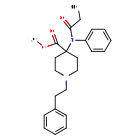
- Mechanism
- Curator reviewed
Carfentanil binds very strongly to mu opioid receptors and acts as a competitive agonist. Opiate receptors are coupled with G-protein receptors and function as both positive and negative regulators of synaptic transmission via G-proteins that activate effector proteins. Binding of the opiate stimulates the exchange of GTP for GDP on the G-protein complex. As the effector system is adenylate cyclase and cAMP located at the inner surface of the plasma membrane, opioids decrease intracellular cAMP by inhibiting adenylate cyclase. Subsequently, the release of nociceptive neurotransmitters such as substance P, GABA, dopamine, acetylcholine and noradrenaline is inhibited. Opioids also inhibit the release of vasopressin, somatostatin, insulin and glucagon. Opioids close N-type voltage-operated calcium channels (OP2-receptor agonist) and open calcium-dependent inwardly rectifying potassium channels (OP3 and OP1 receptor agonist). This results in hyperpolarization and reduced neuronal excitability.
- Primary indication
- Carfentanil is similar (but more potent) to the opioid analgesic fentanyl.Curator reviewed
- Formula / weight
- C24H30N2O3 · 394.5066 g/mol (avg)
- Also known as
- Carfentanyl
Resolves to
YDSDEBIZUNNPOB-UHFFFAOYSA-NSMILESCCC(=O)N(C1=CC=CC=C1)C1(CCN(CCC2=CC=CC=C2)CC1)C(=O)OCWhat you can answer from here — as of September 23, 2026
Which drugs share a target with Carfentanil, and which of those have an active Phase 3 trial?
Create a free account or log in to explore the full data card.
Create Account