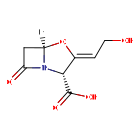
Clavulanic acid is a beta lactamase inhibitor used to enhance the effectiveness of beta lactam antibiotics. Clavulanic acid is a beta-lactamase inhibitor that is frequently combined with Amoxicillin or Ticarcillin to fight antibiotic resistance by preventing their degradation by beta-lactamase enzymes, broadening their spectrum of susceptible bacterial infections.
- Mechanism
- Curator reviewed · 2 references
Clavulanic acid contains a beta-lactam ring in its structure that binds in an irreversible fashion to beta-lactamases, preventing them from inactivating certain beta-lactam antibiotics, with efficacy in treating susceptible gram-positive and gram-negative infections.
- Primary indication
- Clavulanic acid combined with other antibiotics is indicated to prevent the development of drug-resistant strains of bacteria and promotes their therapeutic antibacterial effects.Curator reviewed · 34 structured indications
- Formula / weight
- C8H9NO5 · 199.1608 g/mol (avg)
- First approval
- Canada, 1999 · United States, 1984
- Also known as
- Clavulanate
- Code names
- Antibiotic MM 14151 · BRL 14151 · MM 14151 · RX-10100
- Brand names
Resolves to
HZZVJAQRINQKSD-PBFISZAISA-NSMILES[H][C@@]12CC(=O)N1[C@@H](C(O)=O)\C(O2)=C\COWhat you can answer from here — as of September 23, 2026
Which drugs share a target with Clavulanic acid, and which of those have an active Phase 3 trial?
Create a free account or log in to explore the full data card.
Create Account