Mefloquine is an antimalarial agent used in the prophylaxis and treatment of malaria caused by Plasmodium falciparum and Plasmodium vivax. Malaria is a protozoan disease that places an enormous burden on human health in endemic areas around the world.
- Mechanism
- Curator reviewed · 3 references
The mechanism of action of mefloquine is not completely understood. Some studies suggest that mefloquine specifically targets the 80S ribosome of the Plasmodium falciparum, inhibiting protein synthesis and causing subsequent schizonticidal effects. There are other studies in the literature with limited in vitro data on mefloquine's mechanism of action.
- Primary indication
- Mefloquine is indicated for the treatment of mild to moderate cases of malaria caused by Plasmodium falciparum and Plasmodium vivax.Curator reviewed · 4 structured indications
- Formula / weight
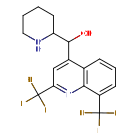
- C17H16F6N2O · 378.3122 g/mol (avg)
- First approval
- Canada, 2010 · United States, 2002
- Also known as
- (DL-ERYTHRO-.ALPHA.-2-PIPERIDYL-2,8-BIS(TRIFLUOROMETHYL)-4-QUINOLINEMETHANOL · 4-QUINOLINEMETHANOL, .ALPHA.-2-PIPERIDINYL-2,8-BIS(TRIFLUOROMETHYL)-, (R*,S*)-(±)-
- Code names
- RO 21-5998 · WR 142,490
Resolves to
XEEQGYMUWCZPDN-UHFFFAOYSA-NSMILESOC(C1CCCCN1)C1=CC(=NC2=C1C=CC=C2C(F)(F)F)C(F)(F)FWhat you can answer from here — as of September 23, 2026
Which drugs share a target with Mefloquine, and which of those have an active Phase 3 trial?
Create a free account or log in to explore the full data card.
Create Account