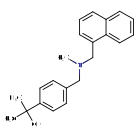
Butenafine is a topical antifungal used to treat tinea versicolor, tinea pedis, tinea cruris, and tinea corporis. Butenafine hydrochloride is a synthetic benzylamine antifungal agent.
- Mechanism
- Curator reviewed
Although the mechanism of action has not been fully established, it has been suggested that butenafine, like allylamines, interferes with sterol biosynthesis (especially ergosterol) by inhibiting squalene monooxygenase, an enzyme responsible for converting squalene to 2,3-oxydo squalene. As ergosterol is an essential component of the fungal cell membrane, inhibition of its synthesis results in increased cellular permeability causing leakage of cellular contents. Blockage of squalene monooxygenase also leads to a subsequent accumulation of squalene. When a high concentration of squalene is reached, it is thought to have an effect of directly kill fungal cells.
- Primary indication
- For the topical treatment of the following dermatologic infections: tinea (pityriasis) versicolor due to M. furfur, interdigital tinea pedis (athlete’s foot), tinea corporis (ringworm) and tinea cruris (jock itch) due to E. floccosum, T. mentagrophytes,...Curator reviewed · 4 structured indications
- Formula / weight
- C23H27N · 317.4672 g/mol (avg)
- First approval
- Canada, 1997 · United States, 1993
- Brand names
Resolves to
ABJKWBDEJIDSJZ-UHFFFAOYSA-NSMILESCN(CC1=CC=C(C=C1)C(C)(C)C)CC1=CC=CC2=CC=CC=C12What you can answer from here — as of October 15, 2026
Which drugs share a target with Butenafine, and which of those have an active Phase 3 trial?
Create a free account or log in to explore the full data card.
Create Account