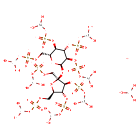
Sucralfate is a gastro-duodenal protective agent used in the treatment of gastric and duodenal ulcers and to prevent duodenal ulcer recurrence. It is considered a cytoprotective agent, protecting cells in the gastrointestinal tract from damage caused by agents such as gastric acid, bile salts, alcohol, and acetylsalicylic acid (aspirin), among other substances.
- Mechanism
- Curator reviewed · 8 references
The mechanism of action of this drug in the healing duodenal ulcers is not yet completely defined, however, there are several probable mechanisms that adequately describe the healing activity of sucralfate. There is evidence that sucralfate acts locally to aid in tissue healing, and not systemically.
Studies in both humans and animals have indicated that sucralfate forms a complex that binds to protein-rich exudate found on the surface of ulcers. It binds to albumin and fibrinogen preventing blood clot lysis by stomach acid (hydrochloric acid). Sucralfate increases the tissue levels of fibroblast growth factors and epidermal growth factors, leading to an increase in prostaglandins at the gastrointestinal tract lining, which promotes the healing of gastrointestinal ulcers.
In the laboratory setting, a sucralfate-albumin film provides a barrier against the entry of hydrogen ions, which are a component of gastric acid. In humans, sucralfate, given at therapeutic doses for ulcers, decreases pepsin activity in gastric fluids by 32%. Pepsin has been shown to be damaging to tissues, further aggravating ulcer lesion inflammation. Bile salts have been implicated in mucosal injury to the gastrointestinal tract. Sucralfate has also been shown to adsorb bile salts in the laboratory, setting, which could further contribute to its beneficial effects in ulcer healing.
- Primary indication
- The sucralfate suspension and tablet are used for the treatment of active duodenal ulcer for up to 8 weeks.Curator reviewed · 14 structured indications
- Formula / weight
- C12H35Al9O55S8 · 1558.67 g/mol (avg)
- First approval
- Canada, 1998 · United States, 1981
- Also known as
- Sucralfato
- Code names
- CGA-6J · OS 202
- Brand names
Resolves to
IPLJAZDIICJQEL-JTJNLBSYSA-ASMILESO.O[Al](O)O.O[Al](O)OS(=O)(=O)OC[C@H]1O[C@@](COS(=O)(=O)O[Al](O)O)(O[C@H]2O[C@H](COS(=O)(=O)O[Al](O)O)[C@@H](OS(=O)(=O)O[Al](O)O)[C@H](OS(=O)(=O)O[Al](O)O)[C@H]2OS(=O)(=O)O[Al](O)O)[C@@H](OS(=O)(=O)O[Al](O)O)[C@@H]1OS(=O)(=O)O[Al](O)OWhat you can answer from here — as of August 31, 2026
Which drugs share a target with Sucralfate, and which of those have an active Phase 3 trial?
Create a free account or log in to explore the full data card.
Create Account