Clomifene is a medication used to induce ovulation. A triphenyl ethylene stilbene derivative which is an estrogen agonist or antagonist depending on the target tissue.
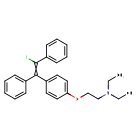
- Mechanism
- Curator reviewed
Clomifene has both estrogenic and anti-estrogenic properties, but its precise mechanism of action has not been determined. Clomifene appears to stumulate the release of gonadotropins, follicle-stimulating hormone (FSH), and leuteinizing hormone (LH), which leads to the development and maturation of ovarian follicle, ovulation, and subsequent development and function of the coprus luteum, thus resulting in pregnancy. Gonadotropin release may result from direct stimulation of the hypothalamic-pituitary axis or from a decreased inhibitory influence of estrogens on the hypothalamic-pituitary axis by competing with the endogenous estrogens of the uterus, pituitary, or hypothalamus. Clomifene has no apparent progestational, androgenic, or antrandrogenic effects and does not appear to interfere with pituitary-adrenal or pituitary-thyroid function.
- Primary indication
- Used mainly in female infertility due to anovulation (e.g. due to polycystic ovary syndrome) to induce ovulation.Curator reviewed · 1 structured indication
- Formula / weight
- C26H28ClNO · 405.96 g/mol (avg)
- First approval
- Canada, 2006 · United States, 1967
- Also known as
- Clomiphene
- Brand names
Resolves to
GKIRPKYJQBWNGO-UHFFFAOYSA-NSMILESCCN(CC)CCOC1=CC=C(C=C1)C(=C(Cl)C1=CC=CC=C1)C1=CC=CC=C1What you can answer from here — as of October 19, 2026
Which drugs share a target with Clomifene, and which of those have an active Phase 3 trial?
Create a free account or log in to explore the full data card.
Create Account