Salsalate is a nonsteroidal anti-inflammatory agent used in the symptomatic relief of rheumatoid arthritis, osteoarthritis and related rheumatic disorders. Salsalate's mode of action as an anti-inflammatory and antirheumatic agent may be due to inhibition of synthesis and release of prostaglandins.
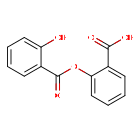
- Mechanism
- Curator reviewed
The mode of anti-inflammatory action of salsalate and other nonsteroidal anti-inflammatory drugs is not fully defined, but appears to be primarily associated with inhibition of prostaglandin synthesis. This inhibition of prostaglandin synthesis is done through the inactivation of cyclooxygenase-1 (COX-1) and COX-2, which are reponsible for catalyzing the formation of prostaglandins in the arachidonic acid pathway. Although salicylic acid (the primary metabolite of salsalate) is a weak inhibitor of prostaglandin synthesis in vitro, salsalate appears to selectively inhibit prostaglandin synthesis in vivo, providing anti-inflammatory activity equivalent to aspirin and indomethacin. Unlike aspirin, salsalate does not inhibit platelet aggregation.
- Primary indication
- For relief of the signs and symptoms of rheumatoid arthritis, osteoarthritis and related rheumatic disorders.Curator reviewed
- Formula / weight
- C14H10O5 · 258.2262 g/mol (avg)
- First approval
- Canada, 1993
- Also known as
- Disalicylic acid · o-Salicylsalicylic acid · Salicylic acid bimolecular ester · Salicyloxysalicylic acid · Salicyloylsalicylic acid
- Code names
- NSC-49171
Resolves to
WVYADZUPLLSGPU-UHFFFAOYSA-NSMILESOC(=O)C1=CC=CC=C1OC(=O)C1=CC=CC=C1OWhat you can answer from here — as of September 23, 2026
Which drugs share a target with Salsalate, and which of those have an active Phase 3 trial?
Create a free account or log in to explore the full data card.
Create Account