Trapidil, a platelet-derived growth factor antagonist, was originally developed as a vasodilator and anti-platelet agent and has been used to treat patients with ischemic coronary heart, liver, and kidney disease.
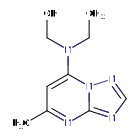
- Mechanism
- Curator reviewed · 6 references
Trapidil is thought to inhibit cyclic adenosine monophosphate (cAMP) phosphodiesterase enzymes. The resultant increase in cAMP potentiates the inhibition of platelets by adenosine. The reduction in platelet activation is likely responsible for the decrease in thromboxane A2 generation seen with trapidil. The increase in cAMP is also likely responsible for the vasdilatory action of trapidil. The increase in protein kinase A activity due to increased cAMP activated L-type calcium channels in the heart leading to increased depolarization and a positive inotropic effect. Lastly, PKA inactivates Raf-1, an activator of mitogen activated protein kinase (MAPK), which leads to a reduction in MAPK activation. This reduction in MAPK prevents mitogenesis due to PDGF binding to PDGF receptors.
- Primary indication
- Used in the treatment of chronic stable angina.Curator reviewed
- Formula / weight
- C10H15N5 · 205.265 g/mol (avg)
Resolves to
GSNOZLZNQMLSKJ-UHFFFAOYSA-NSMILESCCN(CC)C1=CC(C)=NC2=NC=NN12What you can answer from here — as of January 29, 2025
Which drugs share a target with Trapidil, and which of those have an active Phase 3 trial?
Create a free account or log in to explore the full data card.
Create Account