Glycopyrronium bromideProduct ingredient for Glycopyrronium
- Name
- Glycopyrronium bromide
- Drug Entry
- Glycopyrronium
Glycopyrronium, also known as NVA237 or glycopyrrolate, is a racemic mixture of two enantiomers.15 They are both quaternary ammonium compounds and long acting muscarinic antagonists.15 It is one of the most commonly prescribed anticholinergic medications.2,3 Early research into glycopyrronium use was for its indication as an adjunct therapy in the treatment of peptic ulcers.9,10 Later research, taking advantage of the systemic distribution of muscarinic receptors through the body, found that glycopyrronium could also be used for reducing sweat gland,12 oral,18 airway, and gastric secretions;17 as well as reducing cardiac inhibitory reflexes;17 and reducing bronchoconstriction in COPD.13 Glycopyrronium is commonly prescribed as a first line treatment for a wide variety indications and is considered to have a wider therapeutic window than tiotropium.8
Glycopyrronium was originally granted FDA approval on 11 August 1961.10
- Accession Number
- DBSALT001183
- Structure
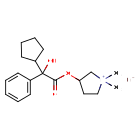
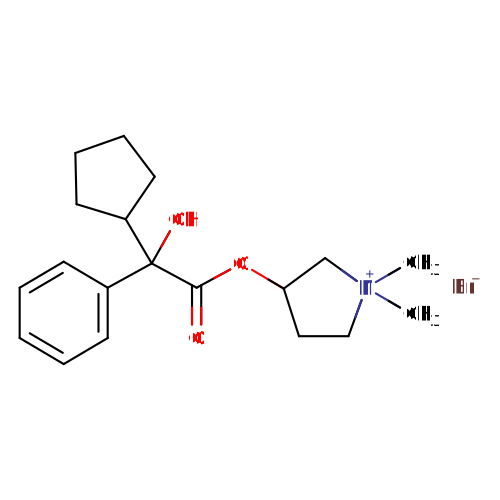
Structure for Glycopyrronium bromide (DBSALT001183)
- Synonyms
- 1-Methyl-3-pyrrolidyl alpha-phenylcyclopentaneglycolate methobromide / 1,1-Dimethyl-3-hydroxypyrrolidinium bromide alpha-cyclopentylmandelate / 3-Hydroxy-1,1-dimethylpyrrolidinium bromide alpha-cyclopentylmandelate / Glycopyrrolate / Glycopyrronium (as bromide) / Glycopyrronium bromide
- External IDs
- AD-237 / AHR-504 / CHF-5259 / CHF5259 / NVA237 / PT-001 / PT001 / QVA-149 component glycopyrronium bromide