Ivacaftor is a cystic fibrosis transmembrane conductance regulator (CFTR) potentiator used alone or in combination products to treat cystic fibrosis in patients who have specific genetic mutations that are responsive to the medication. Ivacaftor (also known as Kalydeco or VX-770) is a drug used for the management of Cystic Fibrosis (CF).
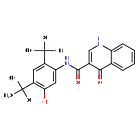
- Mechanism
- Curator reviewed · 7 references
A wide variety of CFTR mutations correlate to the Cystic Fibrosis phenotype and are associated with differing levels of disease severity. The most common mutation, affecting approximately 70% of patients with CF worldwide, is known as F508del-CFTR or delta-F508 (ΔF508), in which a deletion in the amino acid phenylalanine at position 508 results in impaired production of the CFTR protein, thereby causing a significant reduction in the amount of ion transporter present on cell membranes. Ivacaftor as monotherapy has failed to show a benefit for patients with delta-F508 mutations, most likely due to an insufficient amount of protein available at the cell membrane for interaction and potentiation by the drug. The next most common mutation, G551D, affecting 4-5% of CF patients worldwide is characterized as a missense mutation, whereby there is sufficient amount of protein at the cell surface, but opening and closing mechanisms of the channel are altered. Ivacaftor is indicated for the management of CF in patients with this second type of mutation, as it binds to and potentiates the channel opening ability of CFTR proteins on the cell membrane.
Ivacaftor exerts its effect by acting as a potentiator of the CFTR protein, an ion channel involved in the transport of chloride and sodium ions across cell membranes of the lungs, pancreas, and other organs. Alterations in the CFTR gene result in altered production, misfolding, or function of the protein and consequently abnormal fluid and ion transport across cell membranes. Ivacaftor improves CF symptoms and underlying disease pathology by potentiating the channel open probability (or gating) of CFTR protein in patients with impaired CFTR gating mechanisms. The overall level of ivacaftor-mediated CFTR chloride transport is dependent on the amount of CFTR protein at the cell surface and how responsive a particular mutant CFTR protein is to ivacaftor potentiation.
- Primary indication
- When used as monotherapy as the product Kalydeco, ivacaftor is indicated for the treatment of cystic fibrosis (CF) in patients aged one month and older who have one mutation in the CFTR gene that is...Curator reviewed · 8 structured indications
- Formula / weight
- C24H28N2O3 · 392.4907 g/mol (avg)
- First approval
- Canada, 2012 · United States, 2012 · European Union, 2016
- Code names
- VX-770
- Brand names
Resolves to
PURKAOJPTOLRMP-UHFFFAOYSA-NSMILESCC(C)(C)C1=CC(=C(O)C=C1NC(=O)C1=CNC2=CC=CC=C2C1=O)C(C)(C)CWhat you can answer from here — as of March 06, 2025
Which drugs share a target with Ivacaftor, and which of those have an active Phase 3 trial?
Create a free account or log in to explore the full data card.
Create Account