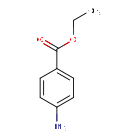
Benzocaine is a topical local anesthetic used for the temporary relief of pain and itching associated with minor burns, sunburn, scrapes and insect bites or minor skin irritations. Benzocaine is an ester local anesthetic that acts by preventing transmission of impulses along nerve fibers and at nerve endings.
- Mechanism
- Curator reviewed · 5 references
Benzocaine diffuses into nerve cells where it binds to sodium channels, preventing the channels from opening, and blocking the influx of sodium ions. Nerve cells unable to allow sodium into cells cannot depolarize and conduct nerve impulses.
- Primary indication
- Benzocaine is indicated for local anesthesia in dentistry, minor trauma, and as preparation for infiltrative anesthesia.Curator reviewed · 23 structured indications
- Formula / weight
- C9H11NO2 · 165.1891 g/mol (avg)
- First approval
- Canada, 1997 · United States, 2012
- Also known as
- Amben ethyl ester · Ethyl aminobenzoate · Ethyl p-aminobenzoate · Ethyl p-aminophenylcarboxylate · p-(Ethoxycarbonyl)aniline
- Code names
- AR-01 · NSC-41531 · NSC-4688
- Brand names
Resolves to
BLFLLBZGZJTVJG-UHFFFAOYSA-NSMILESCCOC(=O)C1=CC=C(N)C=C1What you can answer from here — as of September 23, 2026
Which drugs share a target with Benzocaine, and which of those have an active Phase 3 trial?
Create a free account or log in to explore the full data card.
Create Account