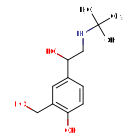
Albuterol is a beta-2 adrenergic receptor agonist used to treat asthma, bronchitis, COPD, as well as prevent exercise induced bronchospasms. It is 29 times more selective for beta2 receptors than beta1 receptors giving it higher specificity for pulmonary beta receptors versus beta1-adrenergic receptors located in the heart.
- Mechanism
- Curator reviewed
In vitro studies and in vivo pharmacologic studies have shown that salbutamol has a preferential effect on beta2-adrenergic receptors compared with isoproterenol. Although beta2 adrenoceptors are the predominant adrenergic receptors in bronchial smooth muscle and beta1 adrenoceptors are the predominant receptors in the heart, there are also beta2-adrenoceptors in the human heart comprising 10% to 50% of the total beta-adrenoceptors. The precise function of these receptors has not been established, but their presence raises the possibility that even selective beta2-agonists may have cardiac effects.
Activation of beta2-adrenergic receptors on airway smooth muscle leads to the activation of adenyl cyclase and to an increase in the intracellular concentration of cyclic-3′,5′-adenosine monophosphate (cyclic AMP). This increase of cyclic AMP leads to the activation of protein kinase A, which inhibits the phosphorylation of myosin and lowers intracellular ionic calcium concentrations, resulting in relaxation. Salbutamol relaxes the smooth muscles of all airways, from the trachea to the terminal bronchioles. Salbutamol acts as a functional antagonist to relax the airway irrespective of the spasmogen involved, thus protecting against all bronchoconstrictor challenges. Increased cyclic AMP concentrations are also associated with the inhibition of release of mediators from mast cells in the airway.
Salbutamol has been shown in most controlled clinical trials to have more effect on the respiratory tract, in the form of bronchial smooth muscle relaxation, than isoproterenol at comparable doses while producing fewer cardiovascular effects. Controlled clinical studies and other clinical experience have shown that inhaled albuterol, like other beta-adrenergic agonist drugs, can produce a significant cardiovascular effect in some patients, as measured by pulse rate, blood pressure, symptoms, and/or electrocardiographic changes.
A measurable decrease in airway resistance is typically observed within 5 to 15 minutes after inhalation of salbutamol. The maximum improvement in pulmonary function usually occurs 60 to 90 minutes after salbutamol treatment, and significant bronchodilator activity has been observed to persist for 3 to 6 hours.
- Primary indication
- Salbutamol is indicated for (i) the symptomatic relief and prevention of bronchospasm due to bronchial asthma, chronic bronchitis, reversible obstructive airway disease, and other chronic bronchopulmonary disorders in which bronchospasm is a complicating factor, and/or...Curator reviewed · 29 structured indications
- Formula / weight
- C13H21NO3 · 239.3107 g/mol (avg)
- First approval
- Canada, 1993 · United States, 1981
- Also known as
- Salbutamol
- Brand names
Resolves to
NDAUXUAQIAJITI-UHFFFAOYSA-NSMILESCC(C)(C)NCC(O)C1=CC(CO)=C(O)C=C1What you can answer from here — as of September 23, 2026
Which drugs share a target with Albuterol, and which of those have an active Phase 3 trial?
Create a free account or log in to explore the full data card.
Create Account