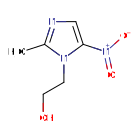
Metronidazole is a nitroimidazole used to treat trichomoniasis, amebiasis, inflammatory lesions of rosacea, and bacterial infections, as well as prevent postoperative infections. Metronidazole is a commonly used antibiotic, belonging to the nitroimidazole class of antibiotics.
- Mechanism
- Curator reviewed · 2 references
The exact mechanism of action of metronidazole has not been fully established, however, it is possible that an intermediate in the reduction of metronidazole which is only made by anaerobic bacteria and protozoa, binds deoxyribonucleic acid and electron-transport proteins of organisms, blocking nucleic acid synthesis. After administration, metronidazole enters cells by passive diffusion. Following this, ferredoxin or flavodoxin reduce its nitro group to nitro radicals. The redox potential of the electron transport portions of anaerobic or microaerophilic microorganisms renders metronidazole selective to these organisms, which cause nitro group reduction, leading to the production of toxic metabolites. These include N-(2-hydroxyethyl) oxamic acid and acetamide, which may damage DNA of replicating organisms.
- Primary indication
- Metronidazole is indicated for the treatment of confirmed trichomoniasis caused by Trichomonas vaginalis (except for in the first trimester of pregnancy) and the patient's sexual partners, bacterial vaginosis, certain types of amebiasis, and various anaerobic...Curator reviewed · 58 structured indications
- Formula / weight
- C6H9N3O3 · 171.154 g/mol (avg)
- First approval
- Canada, 1996 · United States, 1963
- Code names
- BAYER-5360 · NSC-50364 · NSC-69587 · RP-8823
- Brand names
Resolves to
VAOCPAMSLUNLGC-UHFFFAOYSA-NSMILESCC1=NC=C(N1CCO)[N+]([O-])=OWhat you can answer from here — as of September 23, 2026
Which drugs share a target with Metronidazole, and which of those have an active Phase 3 trial?
Create a free account or log in to explore the full data card.
Create Account