Azacitidine is a pyrimidine nucleoside analogue used to treat certain subtypes of myelodysplastic syndrome. It differs from cytosine by the presence of nitrogen in the C5-position, key in its hypomethylating activity.
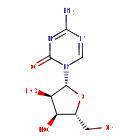
- Mechanism
- Curator reviewed · 9 references
Azacitidine (5-azacytidine) is a chemical analogue of the cytosine nucleoside present in DNA and RNA. It induces antineoplastic activity by inhibiting DNA methyltransferase at low doses and inducing cytotoxicity by incorporating itself into RNA and DNA at high doses.
Covalent binding to DNA methyltransferase results in DNA hypomethylation and prevents DNA synthesis. On the other hand, the incorporation of azacitidine into RNA and DNA leads to cytotoxicity as follows: Following cellular uptake, azacitidine is phosphorylated by uridine-cytidine kinase to form 5-azacytidine monophosphate. Afterwards, pyrimidine monophosphate and diphosphate kinases phosphorylate 5-azacytidine monophosphate to form 5-azacytidine diphosphate and triphosphate, respectively. Azacitidine triphosphate is able to incorporate into RNA, disrupting RNA metabolism and protein synthesis. The reduction of azacytidine diphosphate leads to the formation of 5-aza-deoxycytidine diphosphate, which is then phosphorylated to form 5-azadeoxycitidine triphosphate, a compound able to incorporate into DNA and inhibit DNA synthesis.
As a ribonucleoside, azacitidine incorporates into RNA to a larger extent than into DNA. Incorporating into RNA leads to the disassembly of polyribosomes, defective methylation and acceptor function of transfer RNA, and the inhibition of protein production, resulting in cell death. During the S-phase of the cell cycle, azacitidine exhibits the highest toxicity; however, the predominant mechanism of cytotoxicity has not been elucidated.
The cytotoxic effects of azacitidine cause the death of rapidly dividing cells, including cancer cells that are no longer responsive to normal growth control mechanisms. Non-proliferating cells are relatively insensitive to azacitidine. It is believed that azacitidine exerts its antineoplastic effects through direct cytotoxicity on abnormal hematopoietic cells in the bone marrow.
- Primary indication
- Azacitidine (for subcutaneous or intravenous use) is indicated for the treatment of adult patients with the following French-American-British (FAB) myelodysplastic syndrome (MDS) subtypes: refractory anemia (RA) or refractory anemia with ringed sideroblasts (RARS) (if accompanied...Curator reviewed · 9 structured indications
- Formula / weight
- C8H12N4O5 · 244.2047 g/mol (avg)
- First approval
- Canada, 2017 · United States, 2004 · European Union, 2020
- Also known as
- 5 Azacitidine · 5-Azacitidine · Azacytidine
- Code names
- BMS-986345 · CC-486 · NSC-102816 · U-18,496
- Brand names
Resolves to
NMUSYJAQQFHJEW-KVTDHHQDSA-NSMILESNC1=NC(=O)N(C=N1)[C@@H]1O[C@H](CO)[C@@H](O)[C@H]1OWhat you can answer from here — as of September 23, 2026
Which drugs share a target with Azacitidine, and which of those have an active Phase 3 trial?
Create a free account or log in to explore the full data card.
Create Account