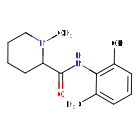
Mepivacaine is a local anesthetic used for local or regional analgesia or anesthesia. A local anesthetic that is chemically related to bupivacaine but pharmacologically related to lidocaine.
- Mechanism
- Curator reviewed
Local anesthetics block the generation and the conduction of nerve impulses, presumably by increasing the threshold for electrical excitation in the nerve, by slowing the propagation of the nerve impulse, and by reducing the rate of rise of the action potential. In general, the progression of anesthesia is related to the diameter, myelination, and conduction velocity of affected nerve fibers. Clinically, the order of loss of nerve function is as follows: pain, temperature, touch, proprioception, and skeletal muscle tone.
- Primary indication
- For production of local or regional analgesia and anesthesia by local infiltration, peripheral nerve block techniques, and central neural techniques including epidural and caudal blocks.Curator reviewed · 7 structured indications
- Formula / weight
- C15H22N2O · 246.348 g/mol (avg)
- First approval
- Canada, 2002 · United States, 1984
- Also known as
- DL-Mepivacaine
- Brand names
Resolves to
INWLQCZOYSRPNW-UHFFFAOYSA-NSMILESCN1CCCCC1C(=O)NC1=C(C)C=CC=C1CWhat you can answer from here — as of September 23, 2026
Which drugs share a target with Mepivacaine, and which of those have an active Phase 3 trial?
Create a free account or log in to explore the full data card.
Create Account