Aluminium monostearate is a salt of stearic acid and aluminium with the molecular formula Al(OH)2C18H35O2. Also known as dihydroxyaluminium or dihydroxy(stearato)aluminium, it is used to form gels in the packaging... While considered safe for use, extensive usage may result in aluminum accumulation.
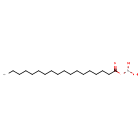
- Mechanism
- Curator reviewed
Antacids perform a neutralization reaction, ie. they buffer gastric acid, raising the pH to reduce acidity in the stomach. When gastric hydrochloric acid reaches the nerves in the gasitrointestinal mucosa, they signal pain to the central nervous system. This happens when these nerves are exposed, as in peptic ulcers. The gastric acid may also reach ulcers in the esophagus or the duodenum. Other mechanisms may contribute, such as the effect of aluminum ions inhibiting smooth muscle cell contraction and delaying gastric emptying. Aluminum is known to bind troponin C (a muscle protein) and to interfere with voltage-dependent calcium transport. Aluminum also binds to and inhibits the activity of mitochondrial voltage gated channels (VDAC).
- Formula / weight
- C18H37AlO4 · 344.472 g/mol (avg)
- Also known as
- Aluminum monostearate · Aluminum stearate 300 · Dibasic aluminium stearate · Dibasic aluminum stearate · Dihydroxyaluminum stearate
- Code names
- AL-ST 103
Resolves to
UGMCXQCYOVCMTB-UHFFFAOYSA-KSMILESCCCCCCCCCCCCCCCCCC(=O)O[Al](O)OWhat you can answer from here — as of September 23, 2026
Which drugs share a target with Aluminium monostearate, and which of those have an active Phase 3 trial?
Create a free account or log in to explore the full data card.
Create Account