Febuxostat is a xanthine oxidase inhibitor used for the management of chronic hyperuricemia in adults with gout who have an inadequate response or intolerance to allopurinol. In early 2008, febuxostat was granted marketing authorization by the European Commission for the treatment of chronic hyperuricemia and gout.
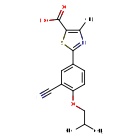
- Mechanism
- Curator reviewed · 5 references
Gout is a form of acute arthritis that is characterized by the accumulation of crystals of monosodium urate and urate crystals in or around a joint, leading to inflammation and persistent urate crystal deposition in bones, joints, tissues, and other organs that may exacerbate over time. Hyperuricemia is closely related to gout, whereby it may exist for many years before the first clinical attack of gout; thus, aberrated serum uric acid levels and hyperuricemia are believed to be the biochemical aberration involved in the pathogenesis of gout. Xanthine oxidoreductase (XOR) can act as a xanthine oxidase or xanthine dehydrogenase. In humans, it is a critical enzyme for uric acid production as it catalyzes the oxidation reaction steps from hypoxanthine to xanthine and from xanthine to uric acid in the pathway of purine metabolism. Febuxostat potently inhibits XOR, blocking both its oxidase and dehydrogenase activities. With high affinity, febuxostat binds to XOR in a molecular channel leading to the molybdenum-pterin active site, where allopurinol demonstrates relatively weak competitive inhibition.
XOR is mainly found in the dehydrogenase form under normal physiological conditions; however, in inflammatory conditions, XOR can be converted into the xanthine oxidase form, which catalyzes reactions that produce reactive oxygen species (ROS), such as peroxynitrite. ROS contribute to vascular inflammation and alterations in vascular function. As febuxostat can inhibit both forms of XOR, it can inhibit ROS formation, oxidative stress, and inflammation. In a rat model, febuxostat suppressed renal ischemia-reperfusion injury by attenuating oxidative stress.
- Primary indication
- Febuxostat is indicated for the chronic management of hyperuricemia in adult patients with gout who have an inadequate response to a maximally titrated dose of allopurinol, who are intolerant to allopurinol, or for whom treatment...Curator reviewed · 1 structured indication
- Formula / weight
- C16H16N2O3S · 316.375 g/mol (avg)
- First approval
- Canada, 2010 · United States, 2009 · European Union, 2016
- Code names
- TEI-6720 · TMX-67
- Brand names
Resolves to
BQSJTQLCZDPROO-UHFFFAOYSA-NSMILESCC(C)COC1=C(C=C(C=C1)C1=NC(C)=C(S1)C(O)=O)C#NWhat you can answer from here — as of October 01, 2026
Which drugs share a target with Febuxostat, and which of those have an active Phase 3 trial?
Create a free account or log in to explore the full data card.
Create Account