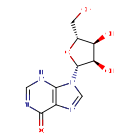
Inosine is a nutritional supplement touted to improve athletic performance and a drug used in vitro as a red blood cell rejuvenator for a unit of red blood cells that will be used in a clinical setting. A purine nucleoside that has hypoxanthine linked by the N9 nitrogen to the C1 carbon of ribose.
- Mechanism
- Curator reviewed
Inosine has been found to have potent axon-promoting effects in vivo following unilateral transection of the corticospinal tract of rats. The mechanism of this action is unclear. Possibilities include serving as an agonist of a nerve growth factor-activated protein kinase (N-Kinase), conversion to cyclic nucleotides that enable advancing nerve endings to overcome the inhibitory effects of myelin, stimulation of differentiation in rat sympathetic neurons, augmentation of nerve growth factor-induced neuritogenesis and promotion of the survival of astrocytes, among others. The mechanism of inosine's possible cardioprotective effect is similarly unclear. Inosine has been reported to have a positive inotropic effect and also to have mild coronary vasodilation activity. Exogenous inosine may contribute to the high-energy phosphate pool of cardiac muscle cells and favorably affect bioenergetics generally. Inosine has also been reported to enhance the myocardial uptake of carbohydrates relative to free fatty acids as well as glycolysis. In cell culture studies, inosine has been found to inhibit the production, in immunostimulated macrophages and spleen cells, of the proinflammatory cytokines, tumor necrosis factor (TNF)-alpha, interleukin (IL)-1, interleukin (IL)-12, macrophage-inflammatory protein-1 alpha and interferon (IFN)-gamma. It also suppressed proinflammatory cytokine production and mortality in a mouse endotoxemic model. These actions might account for the possible immunomodulatory, anti-inflammatory and anti-ischemic actions of inosine.
- Primary indication
- The primary popular claim made for inosine, that it enhances exercise and athletic performance, is refuted by the available research data.Curator reviewed · 1 structured indication
- Formula / weight
- C10H12N4O5 · 268.2261 g/mol (avg)
- First approval
- United States, 1997
- Also known as
- beta-Inosine · hypoxanthine D-riboside · Hypoxanthosine
- Brand names
Resolves to
UGQMRVRMYYASKQ-KQYNXXCUSA-NSMILESOC[C@H]1O[C@H]([C@H](O)[C@@H]1O)N1C=NC2=C1NC=NC2=OWhat you can answer from here — as of September 23, 2026
Which drugs share a target with Inosine, and which of those have an active Phase 3 trial?
Create a free account or log in to explore the full data card.
Create Account