Bisoprolol is a beta-1 adrenergic blocking agent used to prevent myocardial infarction and heart failure and to treat mild to moderate hypertension. It is considered a potent drug with a long-half life that can be used once daily to reduce the need for multiple doses of antihypertensive drugs.
- Mechanism
- Curator reviewed · 4 references
Though the mechanism of action of bisoprolol has not been fully elucidated in hypertension, it is thought that therapeutic effects are achieved through the antagonism of β-1adrenoceptors to result in lower cardiac output. Bisoprolol is a competitive, cardioselective β1-adrenergic antagonist. When β1-receptors (located mainly in the heart) are activated by adrenergic neurotransmitters such as epinephrine, both the blood pressure and heart rate increase, leading to greater cardiovascular work, increasing the demand for oxygen. Bisoprolol reduces cardiac workload by decreasing contractility and the need for oxygen through competitive inhibition of β1-adrenergic receptors.
Bisoprolol is also thought to reduce the output of renin in the kidneys, which normally increases blood pressure. Additionally, some central nervous system effects of bisoprolol may include diminishing sympathetic nervous system output from the brain, decreasing blood pressure and heart rate.
- Primary indication
- Bisoprolol is indicated for the treatment of mild to moderate hypertension.Curator reviewed · 12 structured indications
- Formula / weight
- C18H31NO4 · 325.443 g/mol (avg)
- First approval
- Canada, 2001 · United States, 1993
- Code names
- CL 297,939 · EMD 33 512
Resolves to
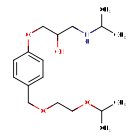
VHYCDWMUTMEGQY-UHFFFAOYSA-NSMILESCC(C)NCC(O)COC1=CC=C(COCCOC(C)C)C=C1What you can answer from here — as of September 23, 2026
Which drugs share a target with Bisoprolol, and which of those have an active Phase 3 trial?
Create a free account or log in to explore the full data card.
Create Account