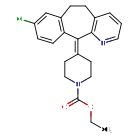
Loratadine is a second generation antihistamine used to manage the symptoms of allergic rhinitis. A lack of sedative and CNS adverse effects make loratadine, along with other second generation antihistamines, preferable over their 1st generation counterparts in many clinical situations.
- Mechanism
- Curator reviewed · 13 references
Histamine release is a key mediator in allergic rhinitis and urticaria. As a result, loratadine exerts it's effect by targeting H1 histamine receptors.
Loratadine binds to H1 histamine receptors found on the surface of epithelial cells, endothelial cells, eosinophils, neutrophils, airway cells, and vascular smooth muscle cells among others. H1 histamine receptors fall under the wider umbrella of G-protein coupled receptors, and exist in a state of equilibrium between the active and inactive forms. Histamine binding to the H1-receptor facilitates cross linking between transmembrane domains III and V, stabilizing the active form of the receptor. On the other hand, antihistamines bind to a different site on the H1 receptor favouring the inactive form.
Hence, loratadine can more accurately be classified as an "inverse agonist" as opposed to a "histamine antagonist", and can prevent or reduce the severity of histamine mediated symptoms.
- Primary indication
- Loratadine is a 2nd generation antihistamine and is used to manage symptoms of allergic rhinitis, wheal formation, urticaria, and other allergic dermatologic conditions.Curator reviewed · 35 structured indications
- Formula / weight
- C22H23ClN2O2 · 382.883 g/mol (avg)
- First approval
- Canada, 2001 · United States, 1993
- Code names
- SCH-29851
- Brand names
Resolves to
JCCNYMKQOSZNPW-UHFFFAOYSA-NSMILESCCOC(=O)N1CCC(CC1)=C1C2=C(CCC3=C1N=CC=C3)C=C(Cl)C=C2What you can answer from here — as of September 23, 2026
Which drugs share a target with Loratadine, and which of those have an active Phase 3 trial?
Create a free account or log in to explore the full data card.
Create Account