Lisinopril is an ACE inhibitor used to treat hypertension, heart failure, and acute myocardial infarction. Lisinopril and captopril are the only ACEIs that are not prodrugs.
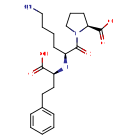
- Mechanism
- Curator reviewed · 7 references
Angiotensin II constricts coronary blood vessels and is positively inotropic, which under normal circumstances, would increase vascular resistance and oxygen consumption. This action can eventually lead to myocyte hypertrophy and vascular smooth muscle cell proliferation.
Lisinopril is an angiotensin converting enzyme inhibitor (ACEI), preventing the conversion of angiotensin I to angiotensin II. This action prevents myocyte hypertrophy and vascular smooth muscle cell proliferation seen in untreated patients. Increased levels of bradykinin also exhibit vasodilating effects for patients taking ACEIs. Lisinopril also inhibits renin's conversion of angiotensin to angiotensin I.
- Primary indication
- Lisinopril is indicated for the treatment of acute myocardial infarction, hypertension in patients ≥6 years, and as an adjunct therapy for heart failure.Curator reviewed · 8 structured indications
- Formula / weight
- C21H31N3O5 · 405.4879 g/mol (avg)
- First approval
- Canada, 2000 · United States, 1987
- Brand names
Resolves to
RLAWWYSOJDYHDC-BZSNNMDCSA-NSMILESNCCCC[C@H](N[C@@H](CCC1=CC=CC=C1)C(O)=O)C(=O)N1CCC[C@H]1C(O)=OWhat you can answer from here — as of September 20, 2026
Which drugs share a target with Lisinopril, and which of those have an active Phase 3 trial?
Create a free account or log in to explore the full data card.
Create Account