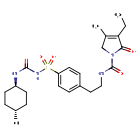
Glimepiride is a sulfonylurea drug used to treat type 2 diabetes mellitus. Type 2 diabetes is a metabolic disorder with increasing prevalences worldwide; it is characterized by insulin resistance in accordance with progressive β cell failure and long-term microvascular and macrovascular complications that lead to co-morbidities and...
- Mechanism
- Curator reviewed · 6 references
ATP-sensitive potassium channels on pancreatic beta cells that are gated by intracellular ATP and ADP. The hetero-octomeric complex of the channel is composed of four pore-forming Kir6.2 subunits and four regulatory sulfonylurea receptor (SUR) subunits. Alternative splicing allows the formation of channels composed of varying subunit isoforms expressed at different concentrations in different tissues. In pancreatic beta cells, ATP-sensitive potassium channels play a role as essential metabolic sensors and regulators that couple membrane excitability with glucose-stimulated insulin secretion (GSIS). When there is a decrease in the ATP:ADP ratio, the channels are activated and open, leading to K+ efflux from the cell, membrane hyperpolarization, and suppression of insulin secretion. In contrast, increased uptake of glucose into the cell leads to elevated intracellular ATP:ADP ratio, leading to the closure of channels and membrane depolarization. Depolarization leads to activation and opening of the voltage-dependent Ca2+ channels and consequently an influx of calcium ions into the cell. Elevated intracellular calcium levels causes the contraction of the filaments of actomyosin responsible for the exocytosis of insulin granules stored in vesicles. Glimepiride blocks the ATP-sensitive potassium channel by binding non-specifically to the B sites of both sulfonylurea receptor-1 (SUR1) and sulfonylurea receptor-2A (SUR2A) subunits as well as the A site of SUR1 subunit of the channel to promote insulin secretion from the beta cell.
- Primary indication
- Glimepiride is indicated for the management of type 2 diabetes in adults as an adjunct to diet and exercise to improve glycemic control as monotherapy.Curator reviewed · 6 structured indications
- Formula / weight
- C24H34N4O5S · 490.62 g/mol (avg)
- First approval
- Canada, 2004 · United States, 2000 · European Union, 2016
- Code names
- HOE-490
- Brand names
Resolves to
WIGIZIANZCJQQY-RUCARUNLSA-NSMILESCCC1=C(C)CN(C(=O)NCCC2=CC=C(C=C2)S(=O)(=O)NC(=O)N[C@H]2CC[C@H](C)CC2)C1=OWhat you can answer from here — as of September 23, 2026
Which drugs share a target with Glimepiride, and which of those have an active Phase 3 trial?
Create a free account or log in to explore the full data card.
Create Account