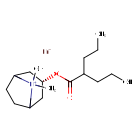
Anisotropine methylbromide is a quaternary ammonium compound. Its use as treatment adjunct in peptic ulcer has been replaced by the use of more effective agents. Depending on the dose, anisotropine... Depending on the dose, anisotropine methylbromide may reduce the motility and secretory activity of the gastrointestinal system, and the tone of the ureter and urinary bladder and may have a slight relaxant action on the...
- Mechanism
- Curator reviewed
Quaternary ammonium compounds such as anisotropine methylbromide inhibit the muscarinic actions of acetylcholine on structures innervated by postganglionic cholinergic nerves as well as on smooth muscles that respond to acetylcholine but lack cholinergic innervation. These postganglionic receptor sites are present in the autonomic effector cells of the smooth muscle, cardiac muscle, sinoatrial and atrioventricular nodes, and exocrine glands.
- Primary indication
- For use in conjunction with antacids or histamine H2-receptor antagonists in the treatment of peptic ulcer, to reduce further gastric acid secretion and delay gastric emptying.Curator reviewed
- Formula / weight
- C17H32BrNO2 · 362.345 g/mol (avg)
- Also known as
- Anisotropine methobromide · Methyloctatropine bromide · Octatropine methylbromide
Resolves to
QSFKGMJOKUZAJM-UHFFFAOYSA-MSMILES[Br-].CCCC(CCC)C(=O)O[C@H]1CC2CCC(C1)[N+]2(C)CWhat you can answer from here — as of September 23, 2026
Which drugs share a target with Anisotropine methylbromide, and which of those have an active Phase 3 trial?
Create a free account or log in to explore the full data card.
Create Account