Aminocaproic acid is an antifibrinolytic agent used to induce clotting postoperatively. An antifibrinolytic agent that acts by inhibiting plasminogen activators which have fibrinolytic properties.
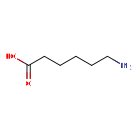
- Mechanism
- Curator reviewed
Aminocaproic acid binds reversibly to the kringle domain of plasminogen and blocks the binding of plasminogen to fibrin and its activation to plasmin. With NO activation of plasmin, there is a reduction in fibrinolysis. This consequently will reduce the amount of bleeding post surgery. Elevated plasma levels of lipoprotein(a) have been shown to increase the risk of vascular disease. Lipoprotein 9a)a has two components, apolipoprotein B-100, linked to apolipoprotein (a). Aminocaproic acid may change the conformation of apoliprotein (a), changing its binding properties and potentially preventing the formation of lipoprotein (a).
- Primary indication
- For use in the treatment of excessive postoperative bleeding.Curator reviewed · 1 structured indication
- Formula / weight
- C6H13NO2 · 131.1729 g/mol (avg)
- First approval
- Canada, 2003 · United States, 1990
- Also known as
- 6-Aminocaproic acid · 6-aminohexanoic acid · EACA · EACS · Epsilcapramine
- Code names
- 177 J.D. · CL-10304 · CY-116 · JD 177 · NSC-26154 · NSC-400230
- Brand names
Resolves to
SLXKOJJOQWFEFD-UHFFFAOYSA-NSMILESNCCCCCC(O)=OWhat you can answer from here — as of September 23, 2026
Which drugs share a target with Aminocaproic acid, and which of those have an active Phase 3 trial?
Create a free account or log in to explore the full data card.
Create Account