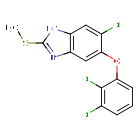
Triclabendazole is an anthelmintic drug used to treat fascioliasis. Fascioliasis is a parasitic infection often caused by the helminth, Fasciola hepatica, which is also known as “the common liver fluke” or “the sheep liver fluke” or by Fasciola gigantica, another helminth.
- Mechanism
- Curator reviewed
Triclabendazole is an anthelmintic agent against Fasciola species.
The mechanism of action against Fasciola species is not fully understood at this time. In vitro studies and animal studies suggest that triclabendazole and its active metabolites (sulfoxide and sulfone) are absorbed by the outer body covering of the immature and mature worms, causing a reduction in the resting membrane potential, the inhibition of tubulin function as well as protein and enzyme synthesis necessary for survival. These metabolic disturbances lead to an inhibition of motility, disruption of the worm outer surface, in addition to the inhibition of spermatogenesis and egg/embryonic cells.
A note on resistance
In vitro studies, in vivo studies, as well as case reports suggest a possibility for the development of resistance to triclabendazole. The mechanism of resistance may be multifactorial and include changes in drug uptake/efflux mechanisms, target molecules, and changes in drug metabolism. The clinical significance of triclabendazole resistance in humans is not yet elucidated.
- Primary indication
- This drug is indicated for the treatment of fascioliasis in patients aged 6 years old and above.Curator reviewed · 1 structured indication
- Formula / weight
- C14H9Cl3N2OS · 359.65 g/mol (avg)
- First approval
- United States, 2019
- Code names
- EGA230B · NVP-EGA230
- Brand names
Resolves to
NQPDXQQQCQDHHW-UHFFFAOYSA-NSMILESCSC1=NC2=C(N1)C=C(Cl)C(OC1=CC=CC(Cl)=C1Cl)=C2What you can answer from here — as of January 29, 2025
Which drugs share a target with Triclabendazole, and which of those have an active Phase 3 trial?
Create a free account or log in to explore the full data card.
Create Account