Acoramidis is a small molecule transthyretin stabilizer for use in patients with cardiomyopathy caused by transthyretin amyloidosis. Similar to the previously developed tafamidis, acoramidis is used to stabilize TTR in its tetrameric form, preventing the formation of amyloidogenic monomers and the progression of amyloidosis.
- Mechanism
- Curator reviewed · 4 references
The first and rate-limiting step in transthyretin (TTR) amyloidogenesis is the dissociation of the TTR tetramer into its constituent monomers. This is followed by misfolding of the resulting monomer and their subsequent aggregation, leading to build-ups of larger oligomers and amyloid fibrils. When these build-ups aggregate in the heart, they can lead to heart dysfunction (transthyretin amyloidosis cardiomyopathy; ATTR-CM).
Acoramidis is a highly selective stabilizer of TTR. It exerts its therapeutic effects by binding to TTR at thyroxine binding sites and stabilizing it in its tetrameric form, thereby slowing the rate-limiting step in amyloidogenesis.
- Primary indication
- Acoramidis is indicated to reduce cardiovascular death and cardiovascular-related hospitalization in adult patients with cardiomyopathy of wild-type or variant transthyretin-mediated amyloidosis (ATTR-CM).Curator reviewed · 1 structured indication
- Formula / weight
- C15H17FN2O3 · 292.31 g/mol (avg)
- First approval
- United States, 2024 · European Union, 2025
- Also known as
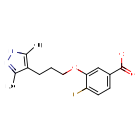
- 3-(3-(3,5-dimethyl-1h-pyrazol-4-yl)propoxy)-4-fluorobenzoic acid
- Code names
- AG-10 · ALXN-2060
- Brand names
Resolves to
WBFUHHBPNXWNCC-UHFFFAOYSA-NSMILESCC1=C(CCCOC2=CC(=CC=C2F)C(O)=O)C(C)=NN1What you can answer from here — as of September 23, 2026
Which drugs share a target with Acoramidis, and which of those have an active Phase 3 trial?
Create a free account or log in to explore the full data card.
Create Account