Chloramphenicol is a broad spectrum antibiotic that is effective against a variety of susceptible and serious bacterial infections but is not frequently used because of its high risk of bone marrow toxicity. An antibiotic first isolated from cultures of Streptomyces venezuelae in 1947 but now produced synthetically.
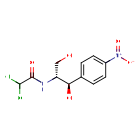
- Mechanism
- Curator reviewed
Chloramphenicol is lipid-soluble, allowing it to diffuse through the bacterial cell membrane. It then reversibly binds to the L16 protein of the 50S subunit of bacterial ribosomes, where transfer of amino acids to growing peptide chains is prevented (perhaps by suppression of peptidyl transferase activity), thus inhibiting peptide bond formation and subsequent protein synthesis.
- Primary indication
- Used in treatment of cholera, as it destroys the vibrios and decreases the diarrhea.Curator reviewed · 19 structured indications
- Formula / weight
- C11H12Cl2N2O5 · 323.129 g/mol (avg)
- First approval
- Canada, 1998 · United States, 1953
- Also known as
- Chlornitromycin · Levomycetin
- Code names
- NSC-3069
- Brand names
Resolves to
WIIZWVCIJKGZOK-RKDXNWHRSA-NSMILESOC[C@@H](NC(=O)C(Cl)Cl)[C@H](O)C1=CC=C(C=C1)[N+]([O-])=OWhat you can answer from here — as of September 23, 2026
Which drugs share a target with Chloramphenicol, and which of those have an active Phase 3 trial?
Create a free account or log in to explore the full data card.
Create Account