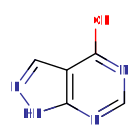
Allopurinol is a xanthine oxidase inhibitor used to reduce urinary and serum uric acid concentrations in patients with gout, recurrent calcium oxalate calculi, and various malignancies. Gout is a disease that occurs by the deposition of monosodium urate crystals (MSU) in body tissues, especially around joints.
- Mechanism
- Curator reviewed · 3 references
Allopurinol is a structural analog of the natural purine base, hypoxanthine. After ingestion, allopurinol is metabolized to its active metabolite, oxypurinol (alloxanthine) in the liver, which acts as an inhibitor of xanthine oxidase enzyme.
Allopurinol and its active metabolite inhibit xanthine oxidase, the enzyme that converts hypoxanthine to xanthine and xanthine to uric acid. Inhibition of this enzyme is responsible for the effects of allopurinol. This drug increases the reutilization of hypoxanthine and xanthine for nucleotide and nucleic acid synthesis by a process that involves the enzyme hypoxanthine-guanine phosphoribosyltransferase (HGPRTase). This process results in an increased nucleotide concentration, which causes feedback inhibition of de novo purine synthesis. The end result is decreased urine and serum uric acid concentrations, which decreases the incidence of gout symptoms.
Accompanying the reduction of serum uric acid by allopurinol is an increase in the serum and urine concentrations of hypoxanthine and xanthine (due to inhibition of xanthine oxidase). In the absence of allopurinol, regular urinary excretion of oxypurines almost entirely occurs in the form of uric acid. After the ingestion of allopurinol, the contents of excreted urine are hypoxanthine, xanthine, and uric acid. Because each substance has its own individual solubility, the concentration of uric acid in plasma is decreased without exposing the renal tissues to a high load of uric acid, thereby decreasing the risk of crystalluria. By lowering the uric acid concentration in the plasma below its limits of solubility, allopurinol encourages the dissolution of gout tophi. Although the levels of hypoxanthine and xanthine are found to be increased after allopurinol ingestion, the risk of deposition in renal tissues is less than that of uric acid, as they become more soluble and are rapidly excreted by the kidney.
- Primary indication
- Allopurinol is indicated in: 1) the management of patients with signs and symptoms of primary or secondary gout (acute attacks, tophi, joint destruction, uric acid lithiasis, and/or nephropathy).Curator reviewed · 13 structured indications
- Formula / weight
- C5H4N4O · 136.1115 g/mol (avg)
- First approval
- Canada, 1997 · United States, 1966
- Also known as
- 4-HPP
- Code names
- BW 56-158 · NSC-101655 · NSC-1390
- Brand names
Resolves to
OFCNXPDARWKPPY-UHFFFAOYSA-NSMILESOC1=NC=NC2=C1C=NN2What you can answer from here — as of September 23, 2026
Which drugs share a target with Allopurinol, and which of those have an active Phase 3 trial?
Create a free account or log in to explore the full data card.
Create Account