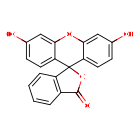
Fluorescein is a dye used in angiography or angioscopy of the iris and retina. A phthalic indicator dye that appears yellow-green in normal tear film and bright green in a more alkaline medium, such as the aqueous humor, and is used therapeutically as a diagnostic aid in corneal injuries...
- Mechanism
- Curator reviewed
Fluorescein sodium is used extensively as a diagnostic tool in the field of ophthalmology. Fluorescein is a fluorescent compound or fluorophore having a maximum absorbance of 494 m and an emission maximum of 521 nm. The yellowish-green fluorescence of the compound can be used to demarcate the vascular area under observation, distinguishing it from adjacent areas. It is applied topically in the form of a drop or it can be injected intravenously to produce a fluorescein angiogram. Topical fluorescein is a useful tool in the diagnosis of corneal abrasions, corneal ulcers, herpetic corneal infections, and dry eye. Fluorescein angiography is used to diagnose and categorize macular degeneration, diabetic retinopathy, inflammatory intraocular conditions, and intraocular tumors.
- Primary indication
- For diagnostic imaging.Curator reviewed · 3 structured indications
- Formula / weight
- C20H12O5 · 332.3063 g/mol (avg)
- First approval
- Canada, 1998 · United States, 1972
- Also known as
- Fluoresceine · Fluoreszein · Resorcinolphthalein · Yellow fluorescein
- Code names
- CI 45350:1
- Brand names
Resolves to
GNBHRKFJIUUOQI-UHFFFAOYSA-NSMILESOC1=CC=C2C(OC3=CC(O)=CC=C3C22OC(=O)C3=C2C=CC=C3)=C1What you can answer from here — as of September 23, 2026
Which drugs share a target with Fluorescein, and which of those have an active Phase 3 trial?
Create a free account or log in to explore the full data card.
Create Account