Epothilone B is a 16-membered macrolide that mimics the biological effects of taxol.
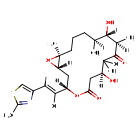
- Mechanism
- Curator reviewed
The principal mechanism of the epothilone class is inhibition of microtubule function. Microtubules are essential to cell division, and epothilones therefore stop cells from properly dividing. Epothilone B possess the same biological effects as taxol both in vitro and in cultured cells. This is because they share the same binding site, as well as binding affinity to the microtubule. Like taxol, epothilone B binds to the αβ-tubulin heterodimer subunit. Once bound, the rate of αβ-tubulin dissociation decreases, thus stabilizing the microtubules. Furthermore, epothilone B has also been shown to induce tubulin polymerization into microtubules without the presence of GTP. This is caused by formation of microtubule bundles throughout the cytoplasm. Finally, epothilone B also causes cell cycle arrest at the G2-M transition phase, thus leading to cytotoxicity and eventually cell apoptosis.
- Primary indication
- Investigated for use/treatment in ovarian cancer, lung cancer, brain cancer, breast cancer, and gastric cancer.Curator reviewed
- Formula / weight
- C27H41NO6S · 507.683 g/mol (avg)
- Also known as
- Epo B · EpoB · Epothilone B
- Code names
- EPO-906 · EPO-906A
Resolves to
QXRSDHAAWVKZLJ-PVYNADRNSA-NSMILES[H]\C(=C(\C)[C@]1([H])C[C@]2([H])O[C@]2(C)CCC[C@]([H])(C)[C@]([H])(O)[C@@]([H])(C)C(=O)C(C)(C)[C@@]([H])(O)CC(=O)O1)C1=CSC(C)=N1What you can answer from here — as of September 23, 2026
Which drugs share a target with Patupilone, and which of those have an active Phase 3 trial?
Create a free account or log in to explore the full data card.
Create Account