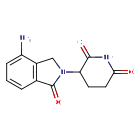
Lenalidomide is a thalidomide derivative used to treat multiple myeloma and anemia in low to intermediate risk myelodysplastic syndrome. Lenalidomide (previously referred to as CC-5013) is an immunomodulatory drug with potent antineoplastic, anti-angiogenic, and anti-inflammatory properties.
- Mechanism
- Curator reviewed · 7 references
Lenalidomide is a drug with multiple mechanisms of action. Lenalidomide exerts immunomodulating effects by altering cytokine production, regulating T cell co-stimulation, and enhancing the NK cell-mediated cytotoxicity. Lenalidomide directly inhibits the cullin ring E3 ubiquitin ligase complex: upon binding to cereblon, a substrate adaptor of the complex, lenalidomide modulates substrate specificity of the complex to recruit substrate proteins of the ligase, including Ikaros (IKZF1), Aiolos (IKZF3), and CK1α. These substrates are then tagged for ubiquitination and subsequent proteasomal degradation. IKZF1 and IKZF3 are B-cell transcription factors that are essential for B-cell differentiation and survival of malignant cells. IKZF3 also regulates the expression of interferon regulatory factor 4 (IRF4), which is a transcription factor that regulates the aberrant myeloma-specific gene. The immunomodulatory actions of lenalidomide can be partly explained by the degradation of IKZF3, since it is a repressor of the interleukin 2 gene (IL2): as lenalidomide decreases the level of IKZF3, the production of IL-2 increases, thereby increasing the proliferation of natural killer (NK), NKT cells, and CD4+ T cells. Lenalidomide inhibits the production of pro-inflammatory cytokines TNF-α, IL-1, IL-6, and IL-12, while elevating the production of anti-inflammatory cytokine IL-10. Lenalidomide acts as a T-cell co-stimulatory molecule that promotes CD3 T-cell proliferation and increases the production of IL-2 and IFN-γ in T lymphocytes, which enhances NK cell cytotoxicity and ADCC. It inhibits the expression and function of T-regulatory cells, which are often overabundant in some hematological malignancies.
Lenalidomide directly exerts antitumour effects by inhibiting the proliferation and inducing apoptosis of tumour cells. Lenalidomide triggers the activation of pro-apoptotic caspase-8, enhances tumour cell sensitivity to FAS-induced apoptosis, and downregulates NF-κB, an anti-apoptotic protein. Independent of its immunomodulatory effects, lenalidomide mediates anti-angiogenic effects by inhibiting angiogenic growth factors released by tumour cells, such as vascular endothelial growth factor (VEGF), basic fibroblastic-growth factor (BFGF), and hepatocyte-growth factor. In vitro, lenalidomide inhibits cell adhesion molecules such as ICAM-1, LFA-1, β2 and β3 integrins, as well as gap-junction function, thereby preventing metastasis of malignant cells.
- Primary indication
- Lenalidomide is indicated for the treatment of adult patients with multiple myeloma (MM) in combination with dexamethasone.Curator reviewed · 18 structured indications
- Formula / weight
- C13H13N3O3 · 259.2606 g/mol (avg)
- First approval
- Canada, 2021 · United States, 2005 · European Union, 2016
- Also known as
- Lena
- Code names
- CC-5013 · CDC-501 · ENMD 0997 · IMiD-1 · SYP-1512
- Brand names
Resolves to
GOTYRUGSSMKFNF-UHFFFAOYSA-NSMILESNC1=CC=CC2=C1CN(C1CCC(=O)NC1=O)C2=OWhat you can answer from here — as of September 23, 2026
Which drugs share a target with Lenalidomide, and which of those have an active Phase 3 trial?
Create a free account or log in to explore the full data card.
Create Account