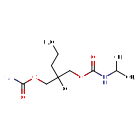
Carisoprodol is a centrally acting muscle relaxant used to relieve the discomfort associated with various musculoskeletal conditions. This drug is available by itself in an oral tablet or combined with aspirin, or in a fixed-dose combination with both aspirin and codeine.
- Mechanism
- Curator reviewed · 4 references
The mechanism of action of carisoprodol in relieving discomfort associated with acute painful musculoskeletal conditions has not been confirmed. In studies using animal models, the muscle relaxation that is induced by carisoprodol is associated with a change in the interneuronal activity of the spinal cord and of the descending reticular formation, located in the brain.
The abuse potential of this drug is attributed to its ability to alter GABAA function. This drug has been shown to modulate a variety of GABAA receptor subunits. GABAA receptor modulation can lead to anxiolysis due to inhibitory effects on neurotransmission.
- Primary indication
- Carisoprodol is indicated for the relief of discomfort related to acute, painful musculoskeletal conditions.Curator reviewed · 3 structured indications
- Formula / weight
- C12H24N2O4 · 260.33 g/mol (avg)
- First approval
- Canada, 1962 · United States, 1960
- Also known as
- Isobamate · Isomeprobamate · Isopropyl meprobamate · Isopropylmeprobamate
- Brand names
Resolves to
OFZCIYFFPZCNJE-UHFFFAOYSA-NSMILESCCCC(C)(COC(N)=O)COC(=O)NC(C)CWhat you can answer from here — as of September 23, 2026
Which drugs share a target with Carisoprodol, and which of those have an active Phase 3 trial?
Create a free account or log in to explore the full data card.
Create Account