Acyclovir is a guanosine analog used to treat herpes simplex, varicella zoster, herpes zoster. Acyclovir is generally used first line in the treatment of these viruses and some products are indicated for patients as young as 6 years old.
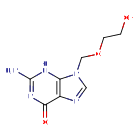
- Mechanism
- Curator reviewed · 6 references
Acyclovir is becomes acyclovir monophosphate due to the action of viral thymidine kinase. Acyclovir monophosphate is converted to the diphosphate form by guanylate kinase. Acyclovir diphosphate is converted to acyclovir triphosphate by nucleoside diphosphate kinase, pyruvate kinase, creatine kinase, phosphoglycerate kinase, succinyl-CoA synthetase, phosphoenolpyruvate carboxykinase and adenylosuccinate synthetase. Acyclovir triphosphate has higher affinity for viral DNA polymerase than cellular DNA polymerase and incorporates into the DNA where the missing 2' and 3' carbons causes DNA chain termination. In other cases acyclovir triphosphate competes so strongly for viral DNA polymerase that other bases cannot associate with the enzyme, inactivating it.
- Primary indication
- An acyclovir topical cream is indicated to treat recurrent herpes labialis in immunocompetent patients 12 years and older.Curator reviewed · 19 structured indications
- Formula / weight
- C8H11N5O3 · 225.2046 g/mol (avg)
- First approval
- Canada, 1997 · United States, 1982
- Also known as
- 9-((2-hydroxyethoxy)methyl)guanine · Acycloguanosine
- Code names
- NSC-645011
- Brand names
Resolves to
MKUXAQIIEYXACX-UHFFFAOYSA-NSMILESNC1=NC(=O)C2=C(N1)N(COCCO)C=N2What you can answer from here — as of September 23, 2026
Which drugs share a target with Acyclovir, and which of those have an active Phase 3 trial?
Create a free account or log in to explore the full data card.
Create Account