Azelaic acid is a saturated dicarboxylic acid used to treat mild to moderate acne vulgaris. It is also produced by Malassezia furfur, also known as Pityrosporum ovale, which is a species of fungus that is normally found on human skin.
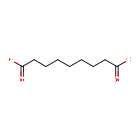
- Mechanism
- Curator reviewed
The exact mechanism of action of azelaic acid is not known. It is thought that azelaic acid manifests its antibacterial effects by inhibiting the synthesis of cellular protein in anaerobic and aerobic bacteria, especially Staphylococcus epidermidis and Propionibacterium acnes. In aerobic bacteria, azelaic acid reversibly inhibits several oxidoreductive enzymes including tyrosinase, mitochondrial enzymes of the respiratory chain, thioredoxin reductase, 5-alpha-reductase, and DNA polymerases. In anaerobic bacteria, azelaic acid impedes glycolysis. Along with these actions, azelaic acid also improves acne vulgaris by normalizing the keratin process and decreasing microcomedo formation. Azelaic acid may be effective against both inflamed and noninflamed lesions. Specifically, azelaic acid reduces the thickness of the stratum corneum, shrinks keratohyalin granules by reducing the amount and distribution of filaggrin (a component of keratohyalin) in epidermal layers, and lowers the number of keratohyalin granules.
- Primary indication
- For the topical treatment of mild-to-moderate inflammatory acne vulgaris.Curator reviewed · 5 structured indications
- Formula / weight
- C9H16O4 · 188.2209 g/mol (avg)
- First approval
- Canada, 2019 · United States, 1996
- Also known as
- 1,7-dicarboxyheptane · 1,9-nonanedioic acid · Anchoic acid · Lepargylic acid · n-nonanedioic acid
- Code names
- ZK-62498
- Brand names
Resolves to
BDJRBEYXGGNYIS-UHFFFAOYSA-NSMILESOC(=O)CCCCCCCC(O)=OWhat you can answer from here — as of September 23, 2026
Which drugs share a target with Azelaic acid, and which of those have an active Phase 3 trial?
Create a free account or log in to explore the full data card.
Create Account